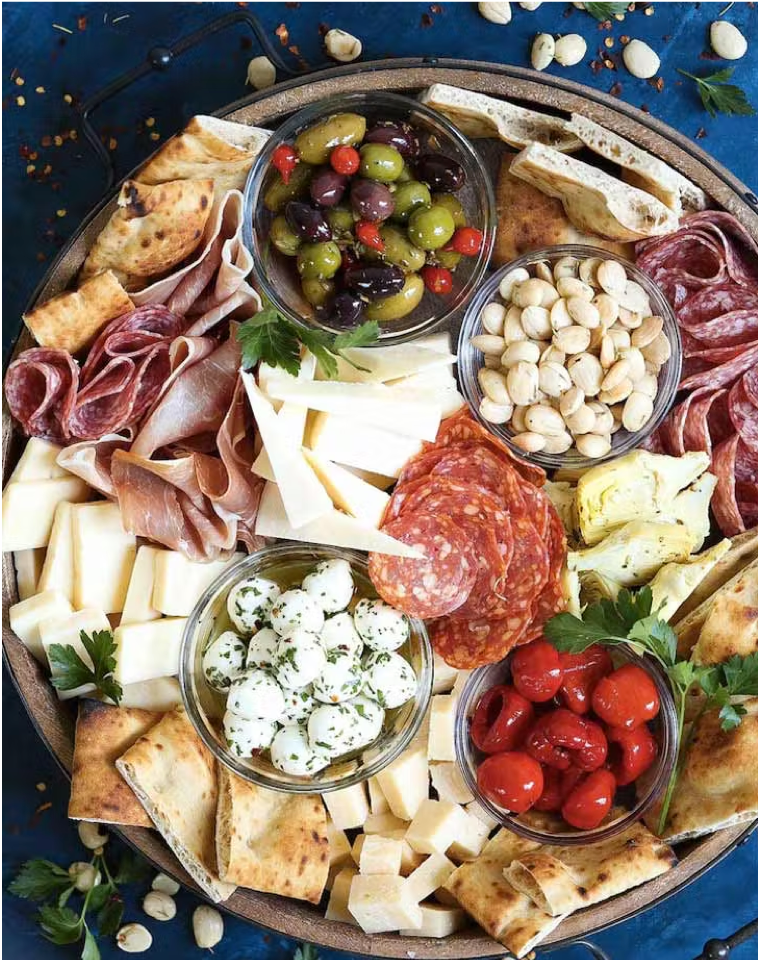
How to Put Together a Great Charcuterie Board
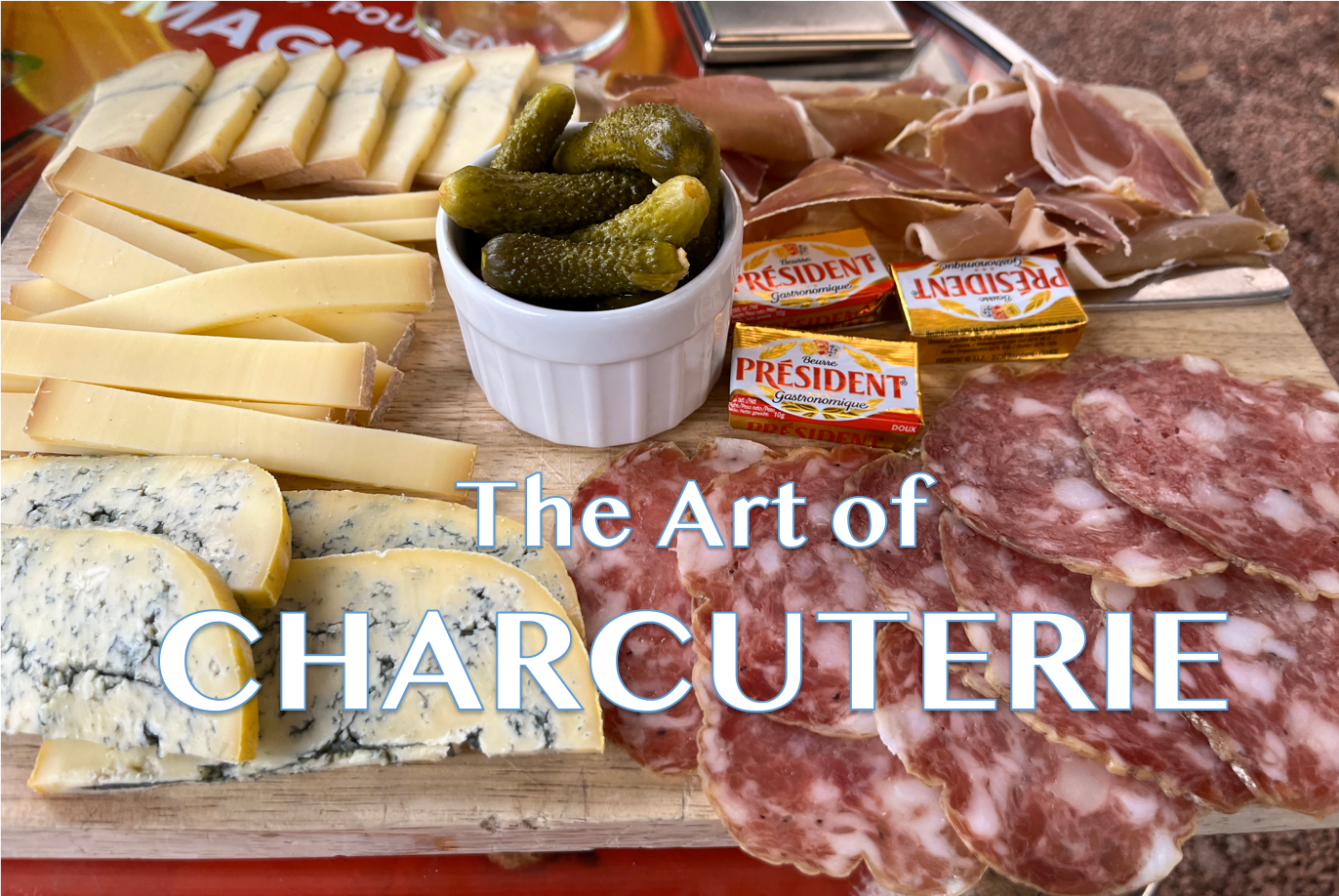
During this holiday season, there is a lot of food at parties, ball games and family gathering. Whether you are hosting a holiday feast or just bringing a dish to a party or dinner, it’s hard to go wrong with a charcuterie board.
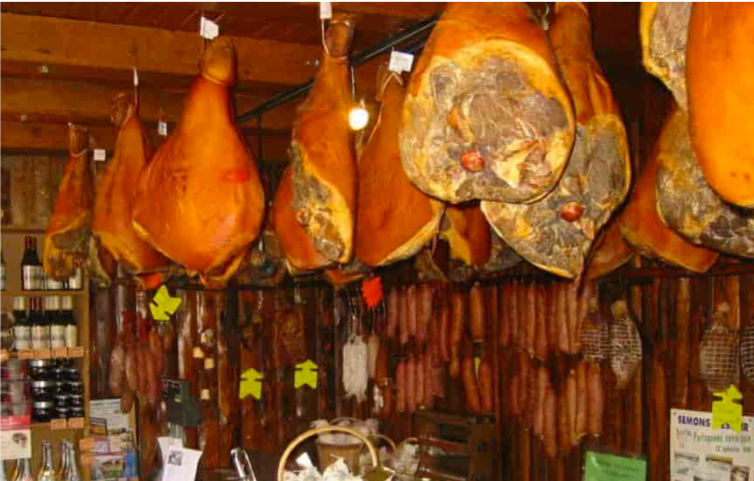
Old-world Charcuterie Shop
What is Charcuterie?
Charcuterie is a French term going back to the 15th Century that literally means “products of a fancy pork butcher.” Found in many cultures from England (Ploughman’s Platter) to Italy (Antipasto) to France, Spain, Belgium and America. A charcuterie platter can include a wide variety of cured meats, cheeses, fruit, nuts, and other condiments served with bread or biscuits.
Charcuterie is the product of preserving meats, especially less-desirable cuts and by-products. Curing, drying, smoking or otherwise preserving meat in sausages, hams, salamis, pâtés or terrines is a time-tested way of extending shelf life and keeping costs down. Once again, simple peasant foods become culinary delights in the hands of artisan butchers.
Growing Popularity
Charcuterie is very popular in Belgium and France and has more recently gained traction in the United States. Savory meats and cheeses are typically served on a platter or cheese board. Charcuterie plates can be simple or quite elaborate. I find them to be best served with beer or wine as a snack, appetizer or party food.
Charcuterie Ingredients
While you can let your imagination run wild on selections of ingredients, most popular charcuterie platters contain these basic things: 1) meats (salamis, etc.); 2) cheeses; 3) bread and/or crackers; 4) fruits, and 5) condiments (like mustard, honey, fruit preserves, pickles, etc.). A simple charcuterie platter may contain one or two of these items, while a more elaborate board could have four or five of each of these items. You will need a platter or cheese board big enough to hold everything. Small bowls will hold things like mustard, honey, nuts, cornichons, etc.). Cheese knives and serving spoons or forks round out necessary tools. Popular ingredients include:
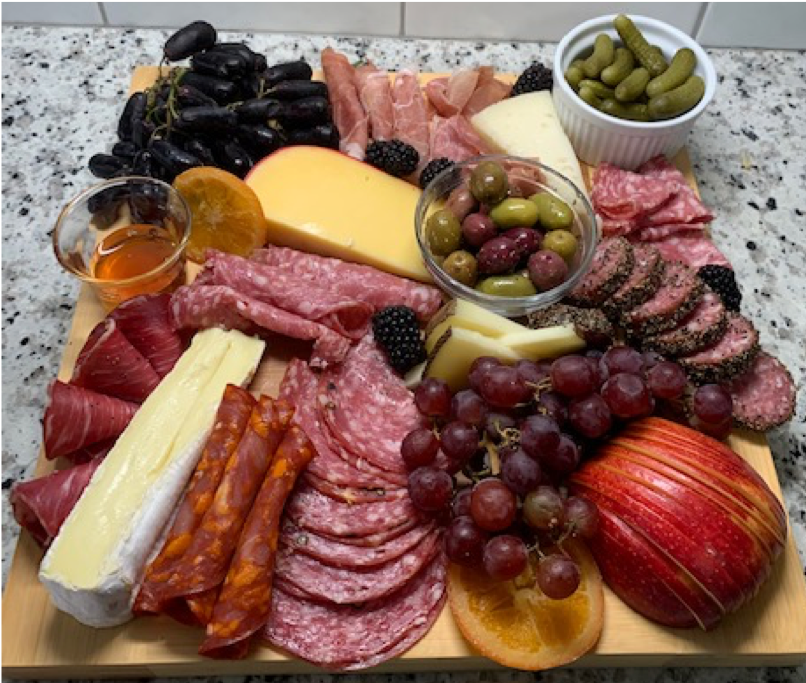
Preserved meats – Sopressata, Capocollo, Prosciutto, Jamon Serrano, Salami, Pepperoni, Mortadella, Bressola, Chorizo, etc.
Cheeses – Almost any cheese will work. I like to have some harder chesses like Cheddar or Gouda, some blue cheese (Roquefort, Maytag Blue or Stilton, goats-milk cheese (Chevre) or fresh Mozzarella. Again, with cheese, the sky’s the limit.
Bread, Biscuits, Crackers – Sliced baguette, wheat crackers, pita bread, waffles or savory biscuits all work with charcuterie. Avoid flavored crackers as they can detract from the subtle flavors of the meats and cheeses.
Fruits to include can be apples, pears, apricots, figs, berries, grapes, cherry tomatoes, or dried fruits.
Condiments—to be paired up with your main ingredients—can include mustards, honey, honeycomb, crudité, fruit preserves, cornichons, olives, almonds, cashews, walnuts, and pecans.
Looks are Important
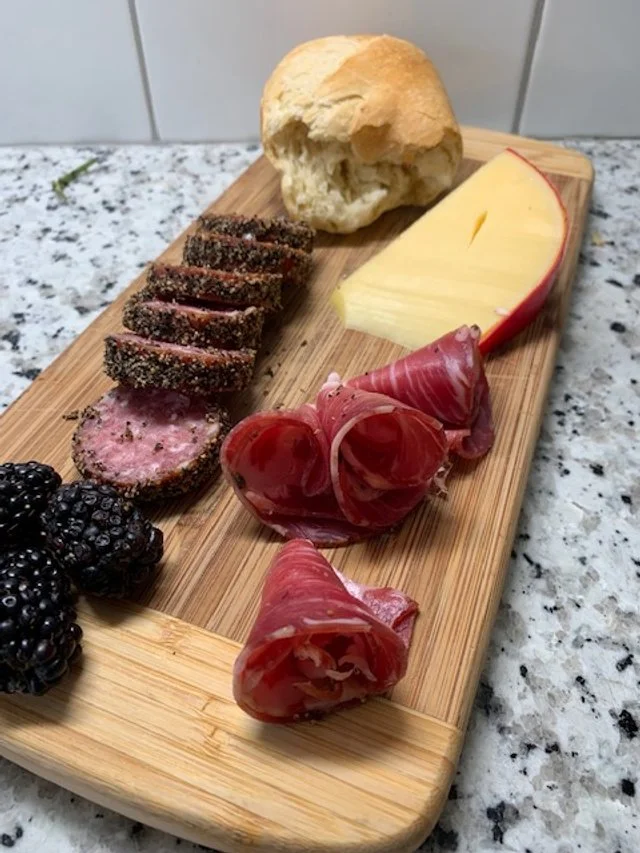
A Simple Board
The idea is to make your charcuterie board as visually interesting and appetizing as possible. No one gets all that excited about a pile of deli meats on a plate. But, a tapestry of carefully places meats, cheeses, fruits, nuts, biscuits and condiments draws people to your charcuterie board and tempts them to taste your array of goodies. I have a number of nice wooden cutting boards that I use for charcuterie and I sometimes use large serving platters. To make the meat, fruit and cheeses more interesting, charcuterie pros fold the meats and cut the cheeses and fruits to enhance visual appeal. The main thing to keep in mind is that all the ingredients should be bite-size. I once took a beautiful salami “rose” from a charcuterie board, only to find that it was formed from nine slices of salami. It was much more than I wanted and I couldn’t exactly put it back. Artistry is nice but keep it simple.
A well-done board generally has artfully folded slices of charcuterie. They not only look interesting but take up less space on your platter, allowing you to get more on it. The pictures below show some interesting ways to fold charcuterie, as well as ways to slice and arrange cheese and fruit.
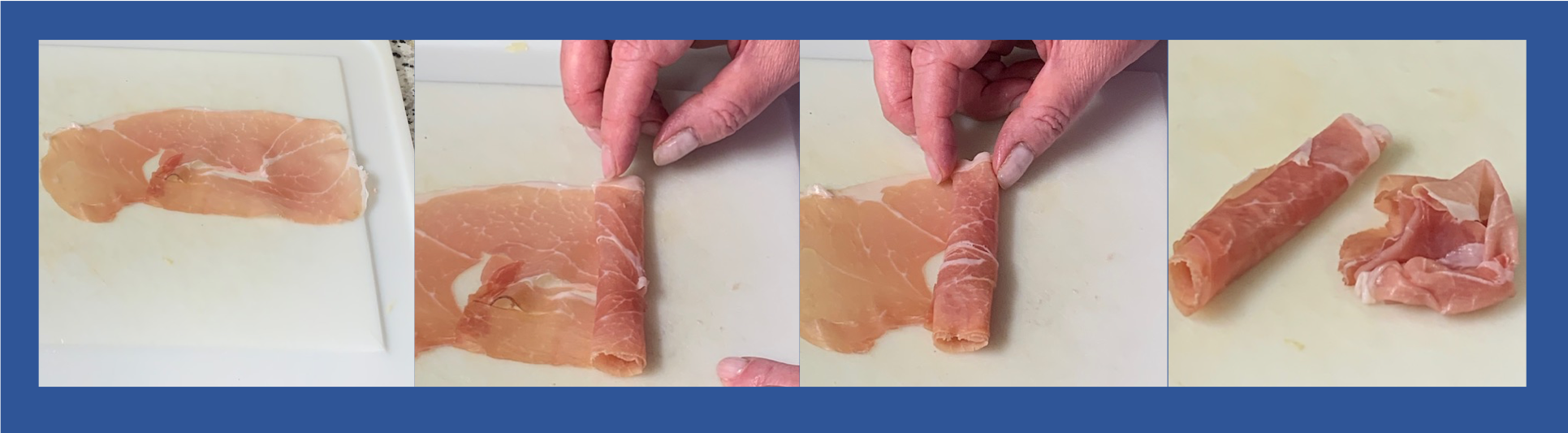
Sliced meats can either be rolled or “scrunched”
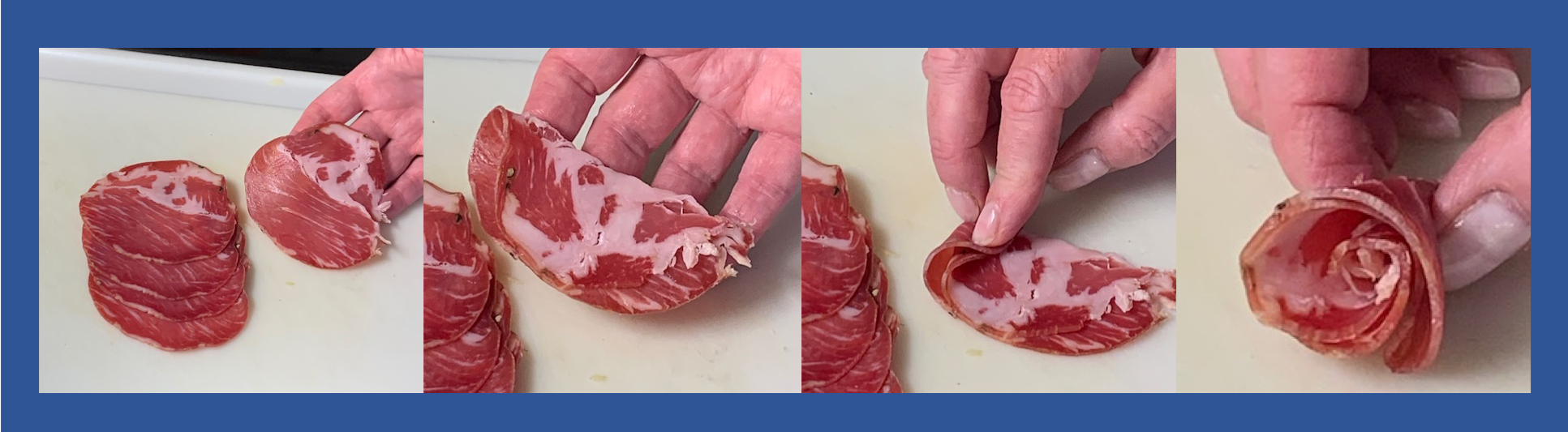
Rolling salami into cones adds interest
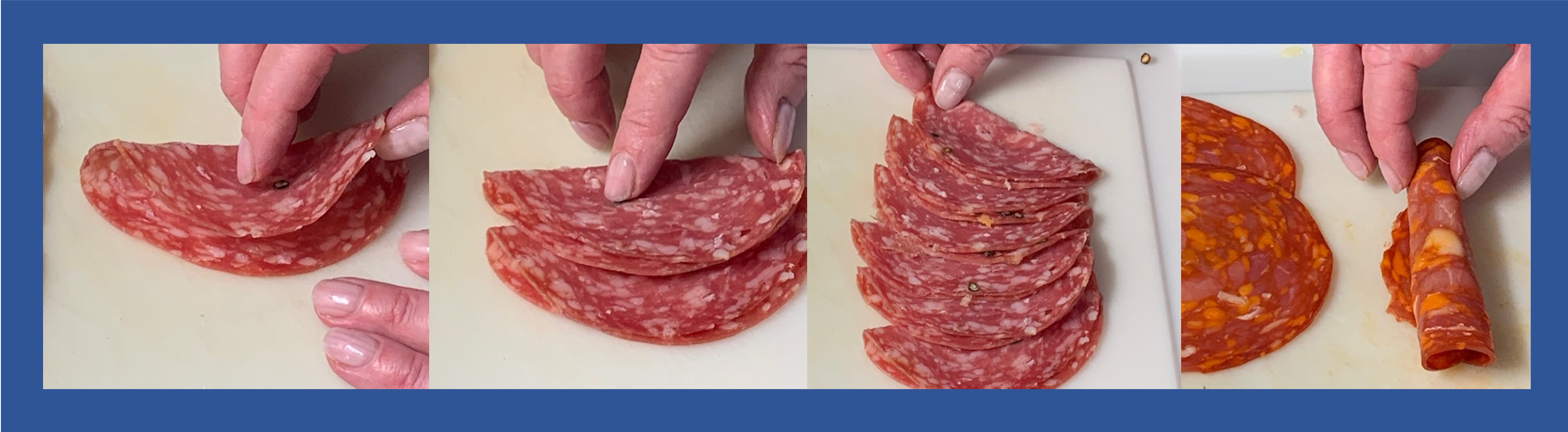
Simple folding and arranging is easy and quick
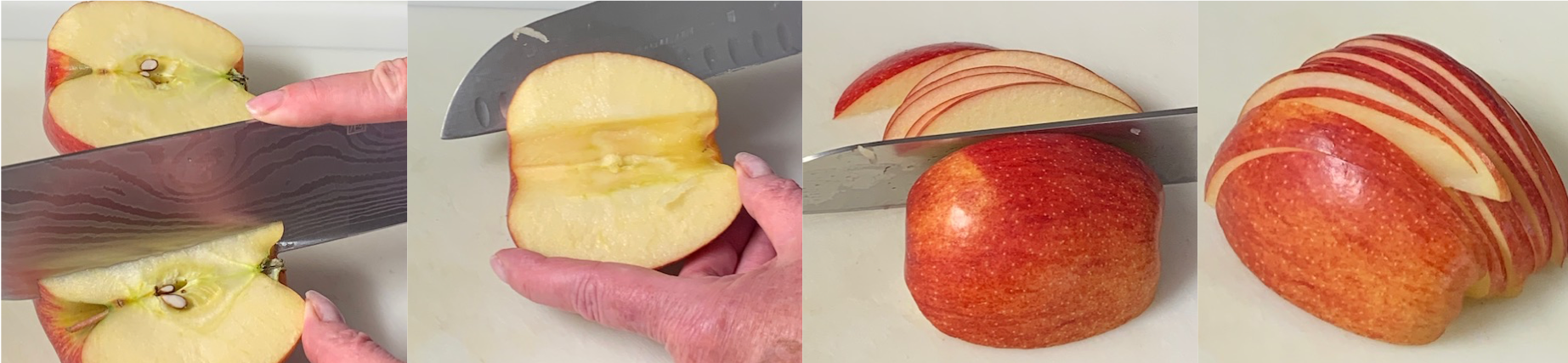
Cuttting fruit into bite-size pieces makes it easier to eat

Cheese can either be pre-cut or cut from larger wedges. Make sure you have sharp knives handy
Serve Something Interesting
A well-designed charcuterie platter can easily be the culinary hit of a party, dinner or event. All it takes is well-selected meats, cheeses, fruits and a little imagination.